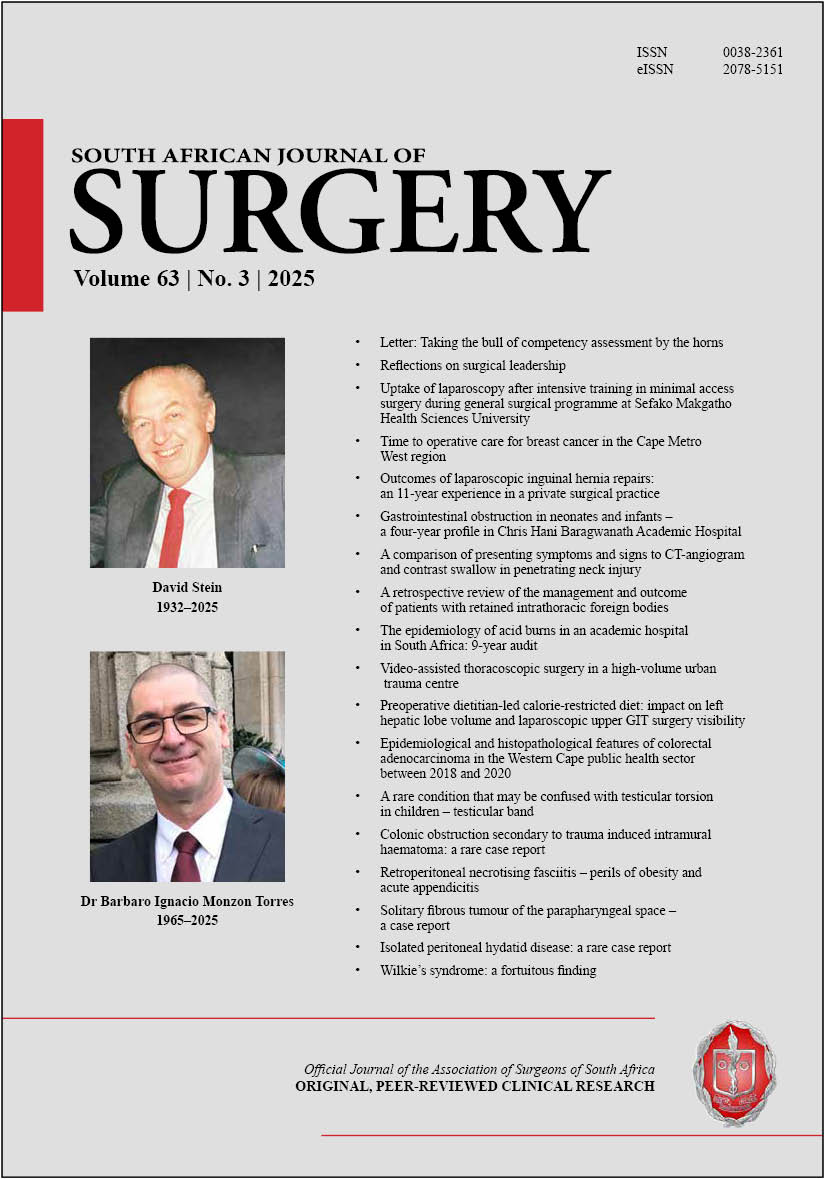
The epidemiology of acid burns in an academic hospital in South Africa: 9-year audit
DOI:
https://doi.org/10.36303/SAJS.01401Keywords:
acid burns, chemical burns, epidemiology, mortality, interpersonal violenceAbstract
Background: Chemical burns worldwide are caused by highly concentrated acidic and alkaline substances being placed onto exposed skin surface with resultant tissue injury. These chemical substances have high toxicity and deep tissue penetrability causing significant morbidity and mortality to patients. This study describes the epidemiology and mortality of acid-related burn injuries to improve patient assessment and management strategies.
Methods: A cross-sectional retrospective analysis of the records of 66 patients admitted to Chris Hani Baragwanath Academic Hospital Adult Burns Unit over a period of 9 years between 2015 and 2024.
Results: This study found that 91% of cases were due to assault, compared to 8% accidental injury. Patients admitted were predominantly male (n = 43; 65%). The mean total body surface area (TBSA) involved was 17.7% with the most common areas involved being the face and arms (n = 47, 72%). The neck was affected in 35 cases (54%), and the chest in 34 cases (52%). Other affected areas included the back (n = 24, 37%), eyes (n = 14, 22%), legs (n = 12, 19%), buttocks (n = 4, 6%), and genitalia (n = 3, 5%). Patient mortality is limited in cases where TBSA < 25%; however, when TBSA > 25% mortality is 75%, further increasing to 100% when patients were ventilated.
Conclusion: This study showed a high rate of acid burns associated with domestic violence and assaults. Prevention strategies should be coordinated with strategies aimed at reducing interpersonal violence.
Downloads
Published
Issue
Section
License
Copyright (c) 2025 Author/s

This work is licensed under a Creative Commons Attribution-NonCommercial 4.0 International License.